

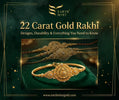
22 Carat Gold Rakhi: Designs, Durability, and Everything You Need to Know
, by CHIRAG MEHTA, 15 min reading time
, by CHIRAG MEHTA, 15 min reading time
Gold jewellery in India has been made in 22 carat for generations. Walk into any traditional jewellery store in Jaipur, Varanasi, or Kolkata and the vast majority of what you see in the cases will be 22K gold. There is a reason for this. 22K gold occupies a sweet spot that Indian jewellery-making has refined over centuries: pure enough to carry significant gold value, durable enough to hold detailed craftsmanship without deforming, and rich in the warm yellow colour that Indian jewellery buyers have always preferred.
When it comes to gold rakhi, 22 carat is one of the most respected choices. It offers real gold purity, genuine investment value, and the structural hardness that allows jewellers to create intricate motifs and detailed designs that would be difficult to achieve in softer 24K gold.
This guide covers everything you need to know about 22 carat gold rakhi, from what 22K means in practical terms, to the designs available, to how it compares with 24K, and how to make sure the piece you buy is genuinely certified.
Gold purity is measured on a scale from 1 to 24 karats. 24K gold is 100% pure. 22K gold is 91.6% pure gold with the remaining 8.4% consisting of other metals, typically copper, silver, or zinc.
This alloy addition is not a flaw. It is a deliberate choice made by jewellers to increase the hardness and structural integrity of the metal. Pure 24K gold is relatively soft. It can develop scratches, bend slightly under pressure, and is not ideal for fine detail work. 22K gold, with its small alloy content, is significantly more durable while still carrying over 91% pure gold content.
The BIS fineness marking for 22 carat gold is 916, meaning 916 parts out of 1000 are pure gold. When you see "916" stamped on a gold piece along with the BIS logo, you are holding certified 22 carat gold.
As confirmed by IIFL, 22K gold is the most common choice for Indian jewellery because it balances purity, workability, and durability in a single material.
This is the question most buyers have when choosing between the two purity levels. Here is a clear comparison across the factors that matter most.
|
Factor |
22 Carat Gold Rakhi |
24 Carat Gold Rakhi |
|
Gold purity |
91.6% |
99.9% |
|
Fineness marking |
916 |
999 |
|
Colour |
Warm yellow |
Deeper, richer yellow |
|
Hardness |
More durable |
Softer |
|
Design complexity |
Better for intricate work |
Better for flat, stamped designs |
|
Investment value |
Excellent |
Higher per gram |
|
Resale and buyback |
At 916 rate per gram |
At 999 rate per gram |
|
Best suited for |
Detailed traditional motifs |
Minimalist, high-purity designs |
Neither is objectively better. The choice depends on what matters more to you: design detail and durability, or maximum gold purity and buyback value.
For sisters who want a rakhi with intricate traditional craftsmanship, engraved detailing, or raised motifs, 22K is the preferred choice because the harder alloy holds fine detail better during the jewellery-making process.
For sisters who want maximum gold purity and the best possible buyback rate per gram, 24K is the stronger choice. Earth Mint Gold uses 999 fineness 24K gold for this exact reason, offering the highest purity available with a 100% buyback guarantee on gold value.
The preference for 22K gold in Indian jewellery is not accidental. It has been refined through generations of craft and cultural tradition.
Indian jewellery, whether temple jewellery from Tamil Nadu, Kundan work from Rajasthan, or the filigree designs of Cuttack, has historically been made in 22K gold because the added alloy allows master craftsmen to achieve the level of detail that defines traditional Indian jewellery aesthetics. The intricate deity engravings on a Ganesha rakhi, the fine beadwork border of a traditional design, the layered texture of a raised motif: all of these are more achievable and more durable in 22K than in softer 24K.
For Raksha Bandhan specifically, many families have a tradition of gifting 22K gold rakhis precisely because they look and feel like traditional gold jewellery rather than coin-format pieces. A 22K Ganesha rakhi with fine engraving and beaded border carries the visual language of a piece your grandmother might have worn, which for many sisters and brothers is exactly the right aesthetic.
As Goodreturns notes, gold rakhis have become a smart way to blend tradition with practicality. Unlike thread or beaded rakhis that lose relevance after the day, gold retains its worth and even appreciates, quietly contributing to a sibling's financial security.
The Ganesha motif in 22K gold allows for the kind of fine engraving detail that is difficult to achieve in softer 24K. The harder alloy holds the intricacy of a full deity face, the crown detailing, the modak in one hand, and the blessing gesture of the other, all within a compact circular frame.
This is the design most often chosen by sisters who want a rakhi that looks like a genuine piece of traditional gold jewellery rather than a simple stamped coin. The craftsmanship is visible and the spiritual significance is immediate.
A 22K gold disc with a traditional beaded border is one of the oldest and most recognisable formats for gold rakhi. The beaded edge is created by rolling and pressing the gold alloy into fine round granules, which are then applied to the frame. This technique requires the hardness of 22K gold to hold its form during the process.
This design has the look of heirloom jewellery. It is the kind of piece that connects the modern Raksha Bandhan celebration to the tradition of gold gifting that has existed in Indian families for generations.
The Om symbol in a raised carved version, where the symbol protrudes slightly from the surface of the disc rather than being flat-stamped, is more achievable in 22K than in 24K gold. The added hardness of the alloy allows the raised Om to maintain its crisp edges over time, even with regular wear.
For brothers who value the Om symbol as a daily spiritual touchstone, a raised carving version carries more visual presence than a flat-stamped version. The symbol is more immediately recognisable and more physically tactile on the wrist.
The Swastik in 22K gold with engraved detailing and a beaded border is one of the most auspicious and traditional designs available. The combination of the engraved symbol and the traditional border work is most commonly seen in 22K gold because the alloy supports both techniques simultaneously.
This is particularly popular for gifting to elder brothers or brothers in positions of family or professional leadership, where the Swastik's symbolism of prosperity and continuity carries particular relevance.
The elongated vertical form of the Trishul in 22K gold benefits from the alloy's structural strength. A fine three-pronged form in softer 24K gold would require extra care during crafting to maintain clean edges. In 22K, the form is more precisely maintained throughout the manufacturing process.
For brothers with a strong devotion to Lord Shiva, this design in 22K gold has the visual crispness and physical integrity that matches the strength of the symbol itself.
A 22K gold rakhi with a Rudraksha bead or a Rudraksha-inspired design element combines the spiritual significance of Rudraksha with the value and permanence of gold. This is one of the most widely gifted traditional combinations for brothers with a deep spiritual practice.
The hardness of 22K gold allows the mounting for the Rudraksha element to be crafted with precision and strength, ensuring the design holds its form over years of wear.
This is the single most important practical step in the buying process. Here is exactly how to do it.
Look for the 916 fineness marking: Every certified 22K gold piece carries the number 916 stamped on it, along with the BIS triangular logo and a 6-digit HUID code. These marks are laser-engraved and crisp on genuine pieces. Blurry, hand-stamped, or incomplete marks are a warning sign.
Check the BIS hallmark details: A complete BIS hallmark for 22K gold includes the BIS logo (a triangular mark), the purity grade (916), and the HUID code. All three must be present. According to Goldmeter, since April 2023, all hallmarked gold must include a HUID. Any piece sold after this date without a HUID is not legally hallmarked.
Verify using the BIS Care App: Download the BIS Care App from Google Play or the Apple App Store. Tap "Verify HUID," enter the 6-digit code from your piece or its certificate, and the app immediately confirms the purity, the registered jeweller, and the hallmarking details. This takes under 30 seconds and is the most reliable verification method available.
Request a certificate of authenticity: Any reputed seller of 22K or 24K gold rakhi will include a certificate with every order. This documents the purity, weight, and details of the specific piece. Earth Mint Gold includes this certificate with every order as standard.
Check for a buyback policy: A seller offering 100% buyback on 22K or 24K gold is demonstrating full confidence in the purity of what they sell. This assurance is your strongest practical guarantee.
A 22 carat gold rakhi is not just a festival gift. It is a small but genuine financial asset.
Gold has historically maintained and grown in value over long periods. According to IBJA data, 22K gold rates in India have appreciated significantly over the past decade. A piece of 916 hallmarked gold purchased at today's rates will hold its value at current gold prices and is likely to be worth more over the long term.
The buyback system in India means this value is recoverable. Any registered jeweller or gold buyer will assess the piece against its declared purity and weight and offer the current market rate. A hallmarked 22K gold rakhi with a clear 916 stamp and HUID is the easiest kind of gold to sell or exchange because its purity is documented and verifiable.
As Parag Shah, CEO of KISNA Diamond and Gold Jewellery, noted in a statement to Goodreturns, a gold rakhi goes beyond being a simple adornment. Unlike sweets, clothes, or fancy threads that lose relevance after the day, gold retains its worth and even appreciates, quietly contributing to a sibling's financial security.
22K gold is more durable than 24K because of its alloy content, making it relatively low-maintenance. Here are the basics:
Store it separately from steel or platinum jewellery, which can scratch the gold surface. The wooden box it arrives in is the ideal storage solution.
Clean with a soft, dry cloth when needed. Gold does not require chemical cleaning solutions. A gentle wipe restores its natural warmth and shine.
Avoid prolonged contact with chlorine, bleach, or harsh industrial chemicals. Brief contact during daily activity will not cause damage, but extended exposure over years is best avoided.
22K gold, unlike 24K, is resistant enough that it can be worn more freely without concern about surface scratches from normal daily activity. It is built for use.
For certified 24K gold rakhis with all the features described in this guide, Earth Mint Gold is one of the most transparent and trusted options available online.
Every piece in the Earth Mint Gold collection comes with:
Certified 999 fineness 24K pure gold (for maximum purity and buyback value)
Exact weight stated and guaranteed with zero tolerance
BIS hallmark certification on every piece
Certificate of authenticity with every order
Premium wooden box packaging with roli chawal and kumkum
100% buyback guarantee on gold value
Free Pan-India shipping on all orders
If you are specifically seeking a 22K gold rakhi with traditional intricate design, look for a jeweller who explicitly states 916 hallmarking, an exact weight in grams, and a buyback policy. The same verification checklist applies regardless of whether you choose 22K or 24K.
For current 22K and 24K gold rate information, refer to the Indian Bullion and Jewellers Association.
For BIS hallmarking verification, visit the Bureau of Indian Standards official website.
A 22 carat gold rakhi is made from gold that is 91.6% pure (marked as 916 fineness). The remaining 8.4% consists of other metals like copper or silver, added to make the gold harder and better suited for detailed jewellery craftsmanship.
Yes. 22 carat gold is genuine, certified gold with 91.6% gold purity. It carries BIS hallmarking, a 916 fineness marking, and full resale and buyback value at current 22K gold rates.
22K gold is 91.6% pure with added alloy for durability. 24K gold is 99.9% pure with no other metals. 22K is better for detailed craftsmanship. 24K has higher gold purity and better buyback value per gram.
Look for the BIS hallmark with a 916 fineness marking and a 6-digit HUID number. Verify the HUID using the BIS Care App. Request a certificate of authenticity and confirm the seller offers a buyback guarantee.
Yes. The alloy content in 22K gold makes it more scratch-resistant and structurally durable than pure 24K gold, making it well-suited for regular wear as a bracelet after Raksha Bandhan.
The fineness marking for 22 carat gold is 916, meaning 916 parts out of 1000 are pure gold. This appears on the BIS hallmark along with the triangular BIS logo and the HUID code.
Yes. Any BIS hallmarked 22K gold piece can be sold or exchanged at current 22K gold rates through any registered jeweller or through the buyback programme of the original seller.
24K gold commands a higher buyback rate per gram because of its greater purity. However, 22K gold is also a sound investment because it holds its value at the 916 gold rate. Both are genuine, recoverable assets.
Earth Mint Gold specialises in 999 fineness 24K gold rakhis, offering the highest purity available with full buyback. For 22K gold designs with traditional craftsmanship, look for a BIS registered jeweller with explicit 916 hallmarking and a buyback policy.
A 22 carat gold rakhi is a deeply traditional, genuinely valuable, and durably crafted gift that carries the full weight of Raksha Bandhan in a form that lasts indefinitely. The 916 purity, the BIS hallmarking, and the detailed craftsmanship that 22K gold enables have made it one of the most respected choices for gold rakhi gifting in India for generations.
Whether you choose 22K for its traditional craftsmanship and durability, or 24K for its maximum purity and buyback value, the most important thing is that the piece you buy is certified, hallmarked, and backed by a seller you trust.
Explore the complete collection of certified gold rakhis for brother at Earth Mint Gold and choose the design that carries the meaning your relationship deserves.